
New capabilities, New Misuses
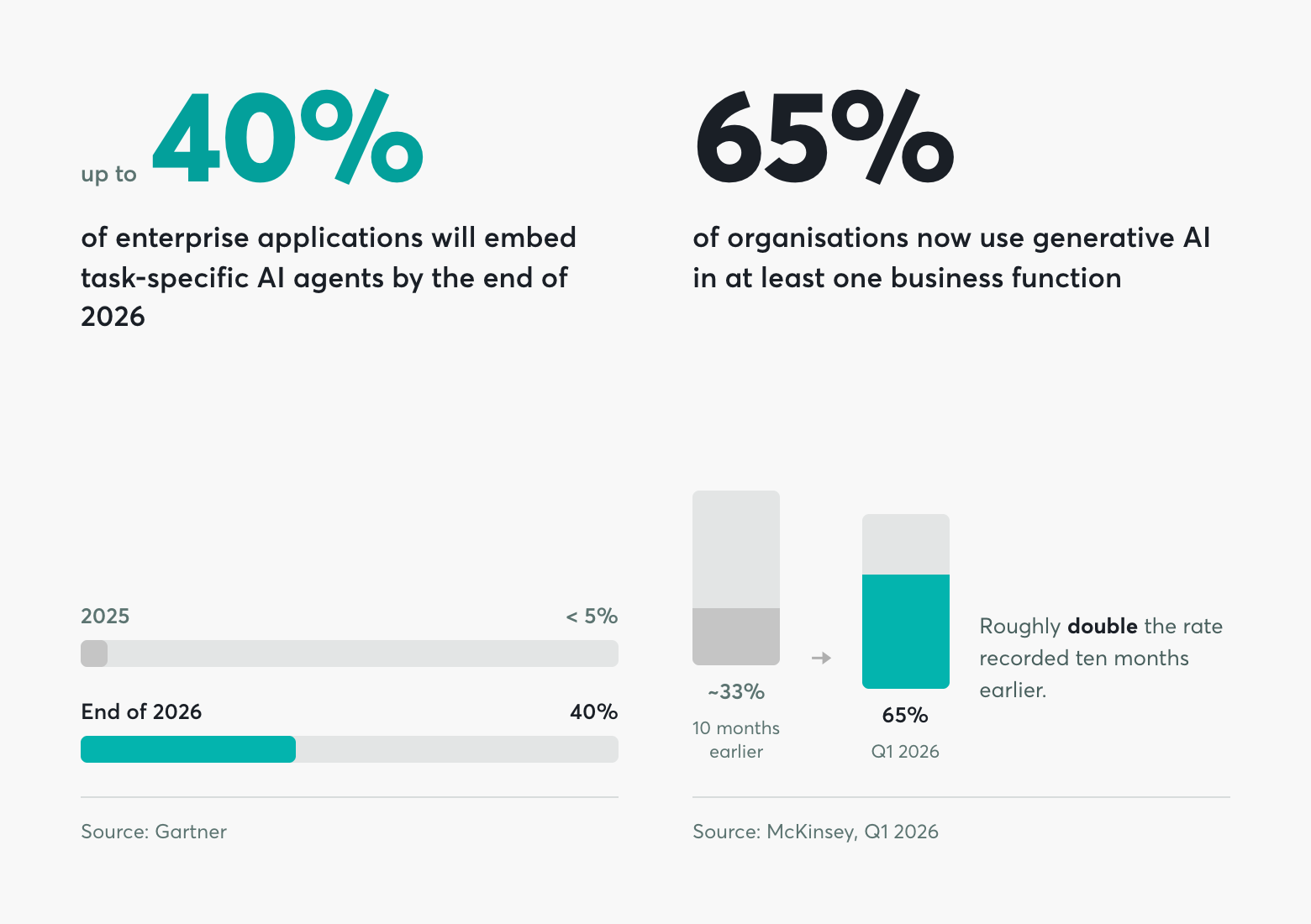
AI and LLM applications are creating new misuse paths that traditional security testing often overlook and this attack surface is growing exponentially. 65% of organisations use AI in at least one business function - double the rate of ten months earlier - and 40% of enterprise applications will embed task-specific AI agents by the end of 2026.
Our AI & LLM Security Assessment evaluates how these systems behave under adversarial or careless use by insiders and authorised users, with a focus on misuse, through the AI interface itself.
The core question we answer is simple: how can your AI be abused to access sensitive data, bypass safety guardrails, or trigger unintended actions through tools and function calling, and with what impact?
This is a focused security and misuse assessment of your deployed AI applications, examining how they can be exploited through the interface, the connected tools, and the data behind them.
Realistic Real-World Testing, End to End
Where applicable, we exercise different user roles and profiles — standard user, elevated user, administrator — to reflect real-world access.


Attempts to extract confidential or restricted data that a given user should never see. Exposure of sensitive information is recognised as the second most critical risk for LLMs and AI applications.

Attempts to misuse the tools and functions the model can invoke: reading or changing records, triggering workflows, or causing unintended impact.

Manipulation of RAG pipelines, knowledge bases, and other context sources to influence outputs. Techniques like RAG make answers more relevant, but they do not make a model more secure: a poisoned source becomes part of what the model trusts and repeats.
A Structured Approach Tailored to AI Systems
Delivered as a one-off project-based engagement, the methodology moves from understanding to adversarial testing:
-
Planning & scoping — identify the AI systems, assistants, and features in scope; understand business purpose, user groups, and data sensitivity; document the tools the model can invoke; agree safety boundaries.
-
Architecture & data-flow review — map how prompts and context are constructed and identify high-value data and high-risk actions reachable via the AI.
-
Threat modelling — design realistic misuse scenarios across prompt injection, jailbreaks, data exfiltration, and tool abuse.
-
Adversarial misuse testing — attempt to bypass guardrails, extract data, manipulate outputs, and abuse tools within agreed limits.
-
Configuration & control review — review system prompts, guardrails, access models, tool permissions, and logging.
-
Risk analysis & reporting — prioritising findings by likelihood and impact, with practical mitigations.
Findings Explained with a Clear Path Forward
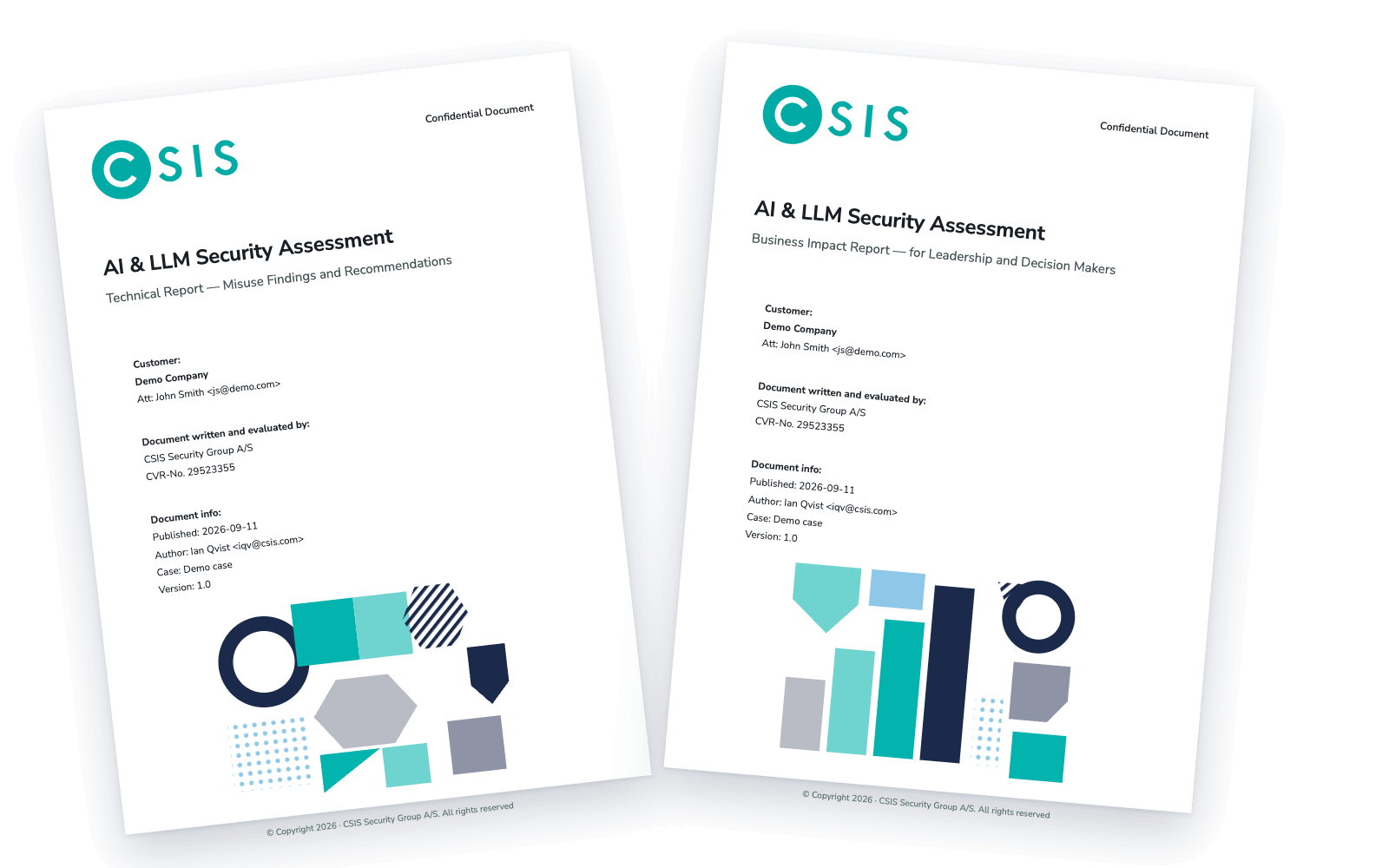
The engagement will answer the central AI vulnerabilities question and give your team a practical route to hardening, delivered in three parts.
Technical Report — detailed findings for your engineers and security team. Concrete examples of attempted misuse, including representative prompts and responses, where attempts succeeded or failed and why. Includes a prioritised list of misuse risks with ratings, and specific remediation and hardening guidance covering guardrails, system prompts, tool and function permissions, access control, logging, and monitoring.
Business Impact Report — an executive report for leadership that outlines the level of risk your AI carries, the scenarios that matter most, and the potential impact on data, customers, operations, and compliance if they are left unaddressed. It sets out clear, prioritised conclusions, an overview of recommended operational remediations, and any executive decisions or investment needed to reduce exposure.
Assessment Debrief — a live walkthrough of the findings with our consultants. We talk your team through what we found, answer questions, and set out the specific steps that will strengthen the areas we identified. You leave with a shared understanding of the risks and a prioritised, practical action plan.
Tested by a Team Who Defend Against Attacks Everyday
AI applications are bringing an accelerating attack surface and source of vulnerabilities. However, attacker behaviour hasn't changed, and leveraging cybersecurity experience, established principles, and best practices remain the best defence.
For over 20 years we have responded to incidents and tracked threat actors. The same expertise and intelligence that informs our cybersecurity and threat intelligence services shapes the misuse scenarios we design for this assessment. We test your AI the way a real adversary would, not against a generic checklist.
Our experience extends to our own use of AI which is an integral part of our daily operations but treated with the same rigorous security standards and governance as any other technology. Accountability, human judgement and clear policies remain fundamental — no matter how fast the technology landscape evolves.