
Threat Matrix Report · 2026 Edition
The European threat landscape in detail
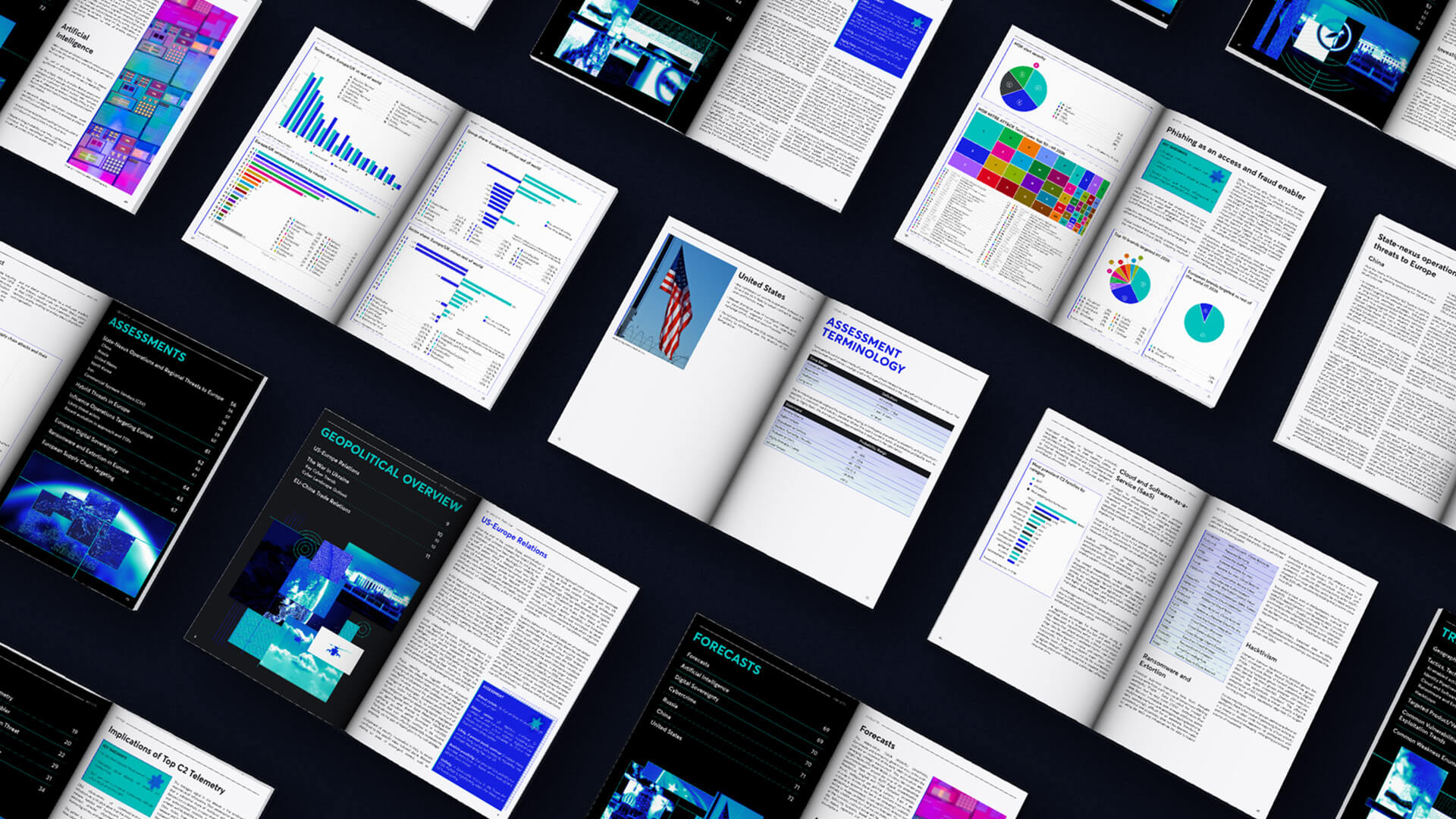
This report is packed with data on the threats facing Europe: more than 70 pages, drawn from our own monitoring and analysis and from trusted outside sources. It shows what attackers are actually doing across Europe, so you can focus your time and budget where they matter most.

Attackers study security updates, then target organisations slow to install them. Using AI, state-backed hackers can build attacks on browsers and firewalls in about a day. In 2025, it took about a week.
Page 39
Stolen logins are one of the main ways attackers break into organisations. In the first half of 2026, CSIS tracked 100.4 million stolen usernames and passwords from Europe and the UK.
Page 20
Ransomware and extortion gangs name their victims on leak sites. In the first half of 2026, they claimed 4,828 organisations, up 18% on the previous year. Nearly a quarter were European.
Page 65
Relative to its population, Northern Europe is hit hardest by ransomware. It had 3.08 cases for every million people, ahead of Central Europe (2.28) and Western Europe (2.10).
Page 22
Attackers hide malicious code in open-source software. In one case, poisoned versions were online for just 46 minutes, during which they were downloaded 47,000 times.
Page 53
The EU's diplomatic service investigates foreign disinformation. The number of cases where it found AI being used rose by 259% in 2025 (147 cases).
Page 63
European threat focus
"A new Europe-focused threat landscape report that provides a more holistic view of geopolitical and cyber threats directly affecting Europe."
Daniel Shepherd, CEO, CSIS Security Group
Europe's security picture is continually changing. In the first half of 2026 alone, relations with the US grew more strained, the Russian threat kept growing, and competition with China sharpened. Meanwhile, AI is making attacks faster and easier to carry out.
These threats are connected. They create both physical and cyber challenges for security teams. So, this report covers them holistically. It shows the overall trends and spotlights specific issues. Use it to brief your leadership and plan ahead.
Prediction highlights
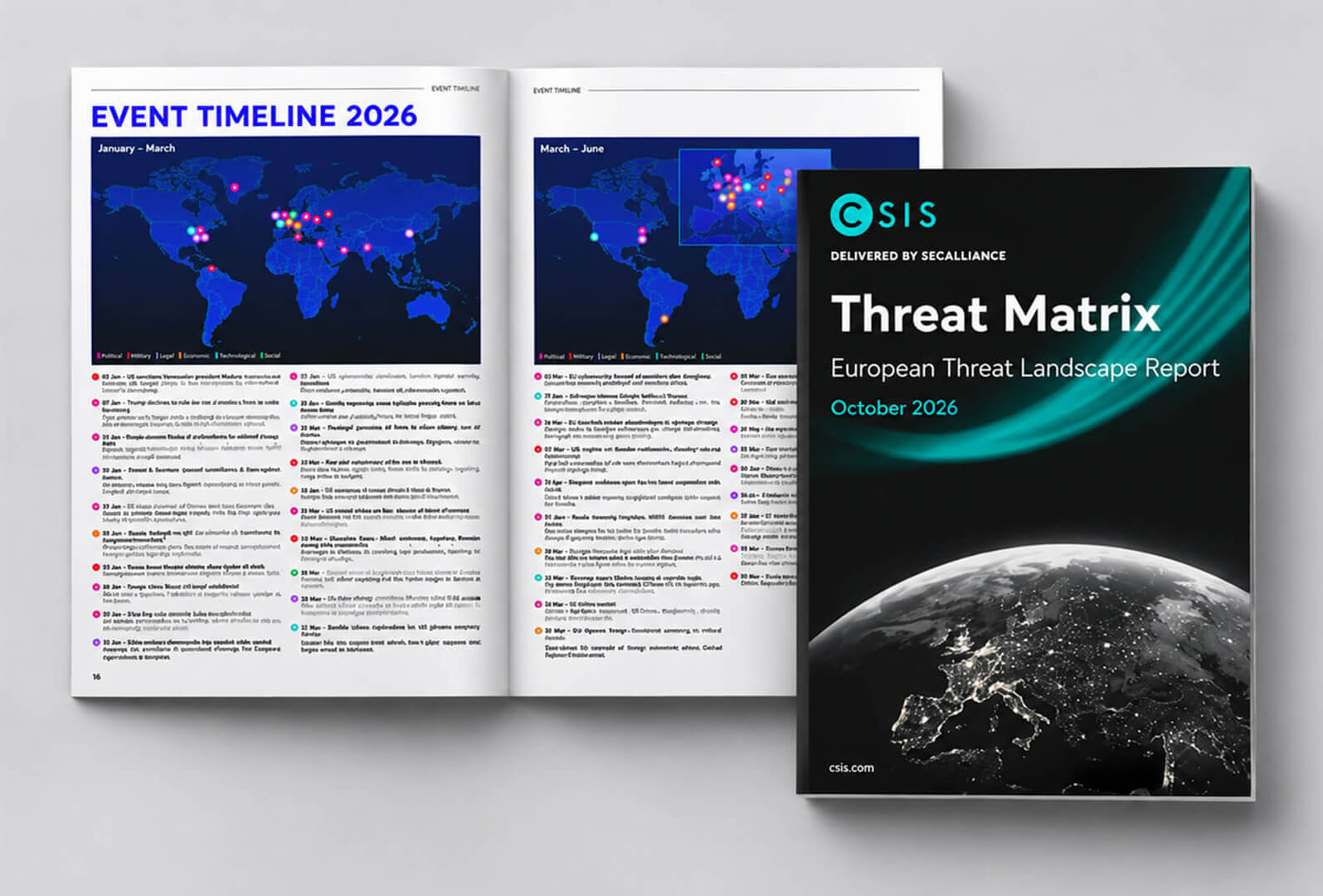
The report doesn't just describe what has happened; it also sets out what our analysts expect next. These forecasts apply a standard scale of terms — the 'Uncertainty Yardstick' — that are based on probability. They also use clear definitions for time frames: short term = three months to one year; medium term = one to three years.
Examples include:
REMOTE CHANCE
China carries out cyber sabotage against Europe in the short term.
HIGHLY UNLIKELY
Putin's regime falls in the short term.
UNLIKELY
A Democratic win in November's US midterm elections significantly changes the direction of US foreign policy.
REALISTIC POSSIBILITY
European intelligence services limit what they share with the US on more issues where their views differ.
LIKELY
An AI-driven computer worm (malicious software that spreads by itself and adapts as it goes) causes a widespread attack in the short to medium term.
HIGHLY LIKELY
Trade relations between the EU and China get worse in the short term, raising the cyber threat to European trade, foreign and finance ministries.
ALMOST CERTAIN
Europe's new, independent security and intelligence structures become priority targets for hostile states' intelligence services.
Find more forecasts throughout the report, with the full set from page 69.